
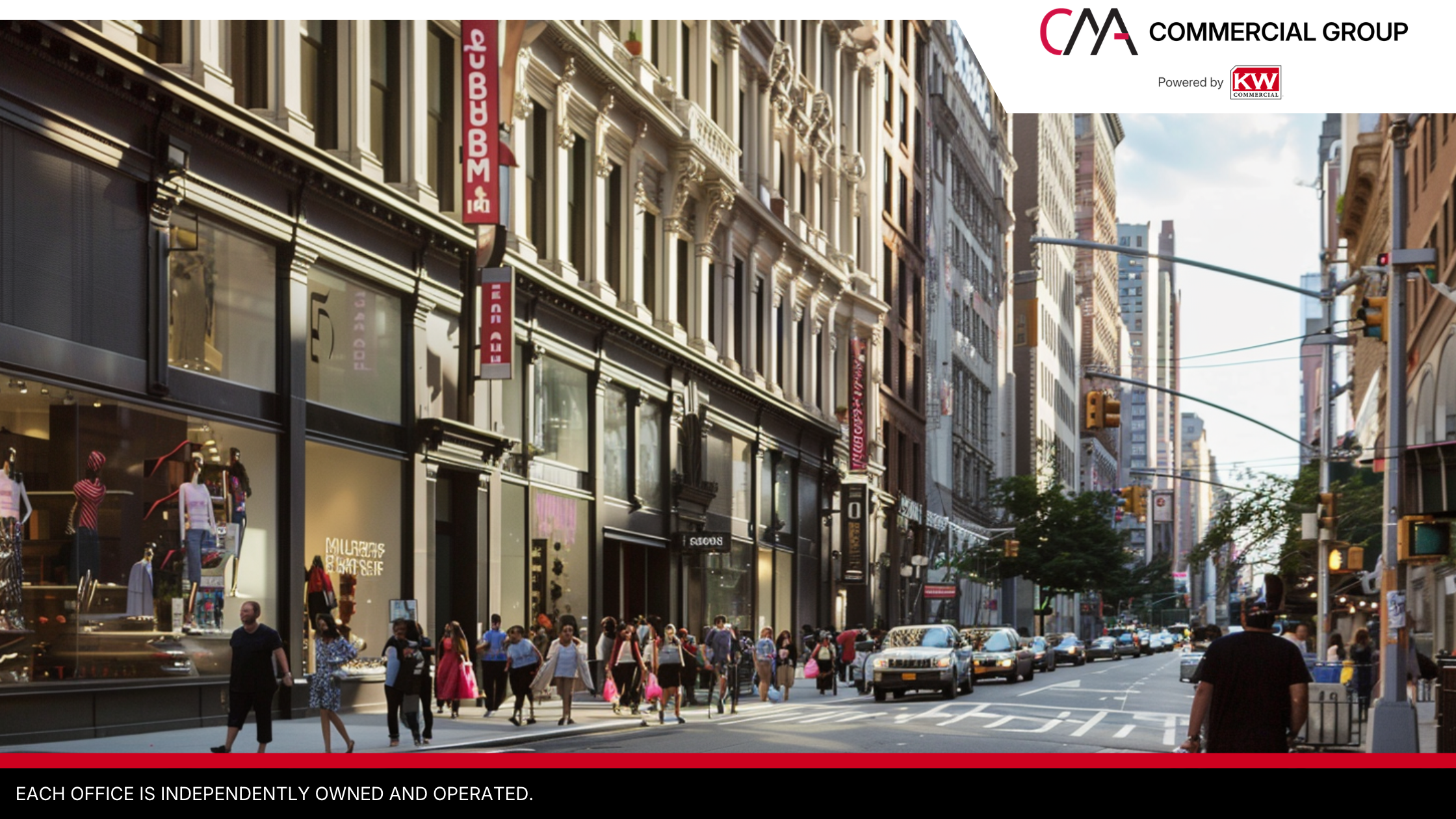
A crowded Houston shopping center during the holidays is an encouraging sight.
Parking lots fill. Storefronts get busier. Restaurants welcome shoppers taking a break between errands. Retailers promote seasonal merchandise, special events, and limited-time deals.
From the street, that activity can make a property look exceptionally strong.
But for commercial real estate owners and investors, it raises a different question:
Will that traffic still be there when the holiday season ends?
As Houston retail moves through the final months of 2026, understanding the difference between seasonal activity and durable demand may be one of the most useful ways to evaluate a shopping center's long-term competitive position.
Holiday spending is expected to grow
The national holiday shopping outlook is positive.
In its October 2026 forecast, the National Retail Federation projected that November and December retail sales would increase 4.2% from 2025, reaching approximately $1.013 trillion.
That forecast reflects continued consumer willingness to spend during the holiday season, even as many households remain mindful of budgets and value.
The latest Census Bureau figures provide additional context.
On November 17, the U.S. Census Bureau reported that national retail and food-service sales totaled approximately $748.2 billion in October 2026, up 6.8% from a year earlier.
The reported monthly increase was 0.2%, within the estimate's margin of uncertainty. These are nominal sales figures, not adjusted for price changes.
Taken together, the data suggests consumers are still spending, but spending growth alone does not tell us how the holiday season will affect individual Houston retail centers.
A strong national forecast is not a property-level demand forecast.
And increased sales during a holiday period do not necessarily translate into sustainable leasing demand.
Houston retail has strong fundamentals—but expansion remains selective
Houston retail enters the holiday season with relatively constrained vacancy.
According to Cushman & Wakefield's Q3 2026 Houston Retail MarketBeat, vacancy finished the quarter at 5.7%.
The market recorded approximately 444,000 square feet of positive net absorption, and the average direct NNN asking rent reached $22.05 per square foot, up 8.2% year over year.
Those are constructive figures.
However, leasing activity through the first nine months of 2026 was down 22% compared with the same period in 2025.
That distinction matters.
A relatively tight market can support asking rents even while retailers become more selective about opening new locations.
For Houston retail owners, this means the real question is not simply whether the market is busy.
It is whether a particular center has a tenant mix, location, and customer base capable of supporting demand throughout the year.
Holiday traffic and durable traffic serve different purposes
Seasonal demand has value.
Holiday shopping can generate additional sales, introduce new customers to a property, and increase awareness of retailers and restaurants.
For certain businesses, the fourth quarter is particularly important to annual revenue.
But holiday shopping is often driven by a different set of customer motivations than the purchases people make throughout the rest of the year.
Gift shopping.
Limited-time promotions.
Seasonal merchandise.
Special events.
Family outings.
Discounts.
Once the calendar changes, many of those motivations become less frequent.
Durable demand often comes from something different:
Habit.
Grocery shopping.
Pharmacy visits.
Medical appointments.
Fitness routines.
Personal services.
Convenient food.
These are categories that can create recurring reasons to visit a center, provided the location and tenant offering fit the surrounding community.
The distinction is not that holiday-focused retailers are weak or necessity-based retailers are guaranteed to succeed.
It is that the demand profiles are different—and commercial property underwriting should recognize that difference.
Grocery is one example of recurring demand
Grocery-anchored retail provides a useful example of how shopping frequency can support a property's everyday relevance.
In its February 2026 report, Placer.ai identified short, frequent grocery trips as an important contributor to physical-store activity.
Customers may visit for a full weekly shopping trip, a few missing ingredients, prepared food, or value-driven purchases.
These different shopping missions create opportunities for surrounding tenants to serve the same customer base.
A person visiting the grocery store may also stop at a pharmacy, pick up dinner, use a personal service, or visit a neighboring business.
But the benefit is not automatic.
Parking convenience, access, tenant compatibility, operating hours, and customer behavior all influence whether those visits translate into additional business.
The strength of a grocery anchor should be evaluated alongside the performance of the rest of the center.
Services and healthcare add another demand pattern
Other repeat-trip uses can play important supporting roles.
Medical clinics, dental practices, pharmacies, fitness businesses, and personal services may generate planned visits that are less directly tied to holiday gift shopping.
That can help create demand across more months of the year.
But these businesses also have different operating requirements.
Medical users may need specialized building systems, appropriate parking, accessible entries, and configurations that work for patient care.
Restaurants may benefit from evening and weekend demand but introduce parking or circulation challenges.
Fitness users may produce predictable visit patterns yet have different peak periods from surrounding retailers.
The opportunity comes from tenant compatibility.
A center becomes more useful when its tenants serve a coherent customer base without creating unnecessary operational friction.
The January test
December can be one of the busiest months in retail.
January tells a different story.
And February can help confirm whether the change is seasonal or something more lasting.
For owners and investors, it is important to interpret those months correctly.
Traffic naturally tends to moderate after major holiday shopping events. A decline from a December peak is not, by itself, evidence of weakness.
The better comparison is with normal seasonal patterns, similar weeks in previous years, and comparable centers.
It is also important to distinguish visits from purchases.
A center may receive additional January visits from holiday returns or exchanges, without those visits translating into equivalent new sales.
That is why the most useful retail analysis combines several indicators where reliable information is available:
Customer visitation patterns.
Tenant sales productivity.
Repeat visits and customer frequency.
Lease renewals and expansion commitments.
Concessions and effective leasing economics.
Occupancy and tenant turnover.
Foot traffic tells us people are visiting.
It does not automatically tell us whether the tenants are profitable or the property income is durable.
What the national retail outlook suggests
The broader 2026 real estate outlook supports a selective approach to retail demand.
In its 2026 Midyear Retail Outlook, CBRE identified grocery, discount, off-price, service-oriented retail, and quick-service or fast-casual food among the categories continuing to support leasing activity.
The report also emphasized the role of well-located suburban retail and constrained new construction.
That provides a useful national framework.
But it should not be treated as proof that every Houston grocery-anchored center, medical tenant, or service business will outperform.
Market strength depends on location.
It depends on rents.
It depends on competition.
And it depends on whether the tenant can support its occupancy costs.
The owner perspective: build a center for the full calendar
For Houston retail owners, the holiday period can provide useful information about customer activity and tenant performance.
But the leasing strategy should support all twelve months.
Owners should understand which tenants bring customers back regularly, which businesses complement one another, and whether the center remains convenient when seasonal promotions disappear.
A vacancy may offer an opportunity to improve the overall mix.
A renewal may provide a chance to evaluate whether a tenant remains well positioned for the surrounding trade area.
An owner may also discover that strong holiday traffic is concentrated in one or two businesses rather than shared across the center.
Those distinctions are useful.
The goal is not to eliminate seasonal retail from the tenant mix.
It is to avoid mistaking seasonal excitement for lasting property strength.
The investor perspective: underwrite the income, not the crowd
For investors, a crowded parking lot is encouraging.
But property value ultimately depends on sustainable income and the risks associated with generating it.
That means examining tenant credit, lease terms, renewal probability, vacancy, rent levels, expenses, and future capital requirements.
A retail property can have strong seasonal sales and still face meaningful lease rollover or tenant concentration risk.
Conversely, a neighborhood center with less dramatic holiday activity may offer a compelling income story because its tenants serve recurring local needs.
Neither conclusion should be assumed without reviewing the actual property.
The question is whether tenant performance and the surrounding trade area support the rent roll over the investment period.
What to watch over the next 90 days
As Houston moves from the holiday shopping season into early 2027, several indicators deserve attention.
Holiday sales versus normal sales: Are strong December results translating into healthy full-year tenant performance?
Post-holiday visits: Are customer patterns returning to normal, improving, or weakening compared with comparable periods?
Tenant renewals: Which retailers remain confident enough to extend their leases?
Leasing announcements: Are grocery, food, medical, services, and value retailers still committing to Houston locations?
Tenant churn: Are retailers vacating, downsizing, or requiring concessions?
Achievable rents: Does the income story hold after incentives, expenses, and capital commitments?
Houston retail enters the holiday season with relatively healthy market fundamentals.
That creates reasons for optimism.
But a strong holiday season and a strong long-term property are not the same thing.
One reflects the intensity of shopping during a particular period.
The other depends on whether the location remains relevant when the season changes.
Holiday traffic can create momentum. Durable demand is what makes the retail story last.